


At the time of writing the next Scottish Parliamentary elections are 11 months away, and we must face an unprecedented and dangerous situation: for the first time since the establishment of the modern Scottish Parliament, we have the possibility of a significant bloc of far-right MSPs entering the chamber.
The rise of Reform in Scotland is in many ways simply the waves of a wider storm crashing against our shores. Across the world (and far from confined to the Global North), far-right forces have either been rising to power, or their strength has forced their opponents (either liberals or various forms of left) into compromising and implementing their ideas for them – in the process fatally undermining their ability to act as true opponents.
These movements thrive on ambiguity, plausible deniability, and the theft and repurposing of their opponents’ language. They have always delighted in appropriating left-wing arguments and twisting them, to argue in favour of an authoritarian vision based on the hard reinforcement of traditional social hierarchies. While their actions and pronouncements must be studied and analysed, nothing they say can be trusted. Their true nature is always concealed under layers of irony, supposed alibis and “owning the libs”. But the violent hatred of other ethnic groups, nationalities and minorities, women and LGBTQ+ people is never far below the surface.
The presence of Reform within Holyrood in any numbers will have a massive impact on the Scottish Overton Window, dragging all of our politics rightwards and towards the mires of social prejudice, conspiracism and just total nonsensical pish. Reform MSPs will be tribunes for the worst types of reactionary garbage, and will regularly derail our political debate given the opportunity. While, for the time being, there is little threat of them forming the Scottish Government, this pressure will come to be reflected in appeasement of their agenda by our mainstream “progressive” parties adopting Reform-esque policies and messaging.
We can already see this damage being done even before the election has taken place, with the unbelievably cringe efforts of Anas Sarwar to Make Scottish Labour Great Again, proposing forging a partnership with the wannabe dictator of the US, “whatever you think of his politics”, and even mooting the risible prospect of a a “Scottish DOGE”. Just when you think there are no lower depths of intellectual depravity left for them to sink to, Scottish Labour manage to surprise you.
They reflect the approach of the UK Prime Minister, who thinks that sitting nervously in the corner giggling and gassing up the playground bully constitutes an appropriate response to the rise of neo-fascism, or that crowing about how many human beings he has deported in adverts that use Reform’s brand colours will somehow impede the rise of Reform.
These pathetic gestures of a party flailing in the dark conform to a wider woeful pattern. Social democratic and liberal governments, faced with opinion polls that pose an existential challenge to their careers, capitulating to far right forces, or indeed to their own institutionalised prejudices. It’s this process that poses as great a threat to our societies as the rise of the far right itself: their potential opposition has already disarmed itself by conceding endlessly to the right’s so-called “legitimate concerns”.
The whole world is facing mounting disorientation and vertigo from the rise of the far right. Extreme nationalists, dedicated to destroying democratic checks on their power, are now in power over billions of people, and have aggressive intentions towards the rest of the world. This has helped to drive the highest level of global conflict seen since 1946, and the Bulletin of Atomic Scientists putting the Doomsday Clock at the closest to midnight it has ever been, far higher than during the Cold War. This interacts profoundly with the daily deepening ecological crisis that is already killing people on a mass scale, as a key plank of this movement has been climate denialism and anti-green conspiracism (handily funded by fossil capital).
For many on the socialist left, this crisis feels like an opportunity, and an electoral call to action. There are various overlapping processes towards the possibility of some kind of new socialist challenge at the 2026 Holyrood elections. But with less than a year to go it’s far from clear if these will manage to coalesce into a unified effort. This comes almost two decades since the far left outside of the Scottish Greens was last represented in parliament, and a decade after the last attempt at a (semi) united socialist parliamentary challenge, the ill-fated RISE, sank without a trace.
A common denominator of these calls is a resort to a laundry list of the political, social and ecological crises we face (along with a dose of standard repetitive denunciations of Keir Starmer). But few are able to put forward a positive case of what potential socialist MSPs would bring to the parliament, or what lessons we have collectively learned from our presence there in the past.
Even less so, an electoral strategy, and what we can realistically hope to achieve by devoting our collective limited time and funding to a parliamentary campaign. Do we aim for a targeted and limited campaign in a key area(s)? Or is the goal what has been historically attempted – standing on the proportional lists in all eight regions?
It feels almost as if we have an article of faith that only an explicitly socialist challenge at the ballot box can stem the tide of Reform. But if our goal is truly to minimise how many far-right MSPs are elected in 2026, it requires a hard headed assessment of what vote can realistically be built in the time remaining. Given how hypothetical the discussion is at this late stage, it would be nothing short of miraculous if the socialist left, standing either under the banner of the SSP or a new name, could escape the doldrums of minor percentage results. The prospect of electing someone with this amount of time surely cannot be a realistic one for anyone considering seriously the results of the last 20 years.
In 2016, it was hubris by all involved (author included) to think that RISE, as a previously completely non-existent and unknown force, could make a serious impact with around two years to prepare for the election. RISE was trying to ride the ebbing tide of the wave of radicalisation that had accompanied the independence referendum, and that was not enough to propel it towards success. Despite important current struggles taking place around climate and Palestine, there has been little equivalent wave of radicalisation to draw on in the last decade.
In these circumstances, a hypothetical socialist campaign on the regional lists, even one that managed to significantly improve on recent previous results, is likely to be insufficient to elect an MSP, but possibly just enough to cost the Scottish Greens an MSP in tightly fought regions. In the 2021 parliamentary elections, far-right candidates stood on a fake platform as Independent Green Voice. The thousands of votes they received played an important role in the failure to elect Green MSPs in two regions, the places on regional lists instead being taken by Tories. Meanwhile, the vote tally of RISE was infinitesimal enough that it likely had little impact on the Green result – but many left-wing Greens were left wondering what the point of standing separately on a largely similar manifesto, for an alliance that disintegrated following the election, had been.
You don’t have to think the Scottish Greens are perfect to recognise that they have a party infrastructure, a body of talented activists and an existing voter base, as well as socialists among their membership, that all are already in place. Collectively, the pro-independence left, in common with our compatriots around the world, are on the defensive after a decade plus of heavy battering. An ill-judged campaign that divides the remaining pro-independence left vote may in fact result in more Reform MSPs taking places on the regional list, which are currently occupied or could be by Green MSPs. Holyrood votes are not redistributed as is the case in more proportional local elections. While a symbolic campaign has its value, and can lay foundations for the future, we also must consider the concrete election results we wish to see.
“An ill-judged campaign that divides the remaining pro-independence left vote may in fact result in more Reform MSPs taking places on the regional list, which are currently occupied or could be by Green MSPs.”
Does that mean we might as well all pack up and go home? Are socialist activists who are not primarily active in the Scottish Greens irrelevant to our current situation? The answer, of course, is absolutely not. Standing in a Holyrood election is a complex project, that needs to be undertaken with some infrastructure and expertise that the socialist left currently lacks. There is no shame in being honest about this, as Holyrood elections are far from the only place where our time, energy, knowledge, experience and pooled income can be usefully deployed, and strengthened through use.
In the face of assaults from the far right, it is of course our role and duty to be on the frontline of all defences of equality and communities under attack. These attacks are rapidly escalating, and require people who are willing and able to organise others to strike, take direct action, stand in the way of cops and immigration raids, and stand up to those incited to violence by the state of mainstream political “debate”.
Beyond emergency solidarity with those those facing repression, socialists rightly point to the role of dystopian social conditions in Scotland following years of austerity in the rise of the far right. The popular forces required to tackle these in the community (trade unions, community organisations, tenants’ unions, climate action networks and social movements) are also at a low ebb in our current political climate. They frankly would be a better use of £500 than a lost deposit for a vanity project electoral challenge.
The other advantage of devoting more efforts to organising around shared common interests is that political differences on other contentious questions can be parked at the movements’ metaphorical door. You don’t need a fully agreed programme to defend workers’ rights, or call out a scummy landlord.
But that does not mean however that these questions can be dodged completely, and the process of forming a new political party or broad alliance to contest elections makes them unavoidable. Mostly these revolve around how to respond to the rise of the modern far right. There are many individual issues around which this division expresses itself, but they all centre on whether we choose to confront all far right attacks on equality, and where to draw the line in a climate of resurgent and violent racism, misogyny, transphobia, ableism.
How do we conduct these arguments – or do we choose to tactically avoid them in the hope of building a sufficiently “broad” coalition? Should members of socially stigmatised groups tactically keep quiet about their own demands in favour of a “class unity” with those who question their social reality?
This is a major challenge to which the broad left and trade union movement, composed of many political parties, campaigns and organisations, must be able to respond to. If we fail to confront these key questions, we will not only be hopelessly divided, but worse we will easily fall victim to being caught in the tailspin of neo-fascist arguments. But you don’t have to agree with the view given on the issues that will be highlighted in following articles to accept that they are major obstacles to “left unity”. Whether or not a socialist electoral challenge next year materialises, these are questions that must be faced by any attempt at left realignment.
The resurgent far right has, for over a decade, been successfully mounting an epic counter-revolutionary backlash on all social gains for equality made since the 1960s. Confining ourselves to Europe and the US, some notable examples of their success so far would include the removal of the constitutional right to abortion in the US after 50 years; the horrific abuse, imprisonment and murder of refugees as part of ever more brutal border regimes; the global transphobic moral panics over “gender ideology”, used in Scotland to overrule our parliament; the escalating attacks against “gay propaganda” in Russia, culminating in discussion of LGBTQ+ issues in public being equated with terrorism; profound pushback against any type of moves to promote inclusion in education and employment, such as the current US administration purging suspect words from the Federal Government.
A key method of the counter-revolutionary backlash has been to try and paint challenges to racism, misogyny, transphobia, ableism etc. as weird minority concerns that are actually being pushed as part of some grand conspiracy to “distract” us all from the “real issues”. They are “culture wars” by which the elite have robbed the “white working class” of what they deserve. There are left and right wing versions of this argument, but they see the promotion of these supposedly “minority concerns” as intrinsically linked with the neoliberal project, and hypocritical liberals as their biggest enemy.
As in all big lies, there is a small kernel of truth in this. There is, of course, a difference between genuine hard fought gains of liberation movements, and tokenistic gestures aimed to distract and placate rather than tackle systemic inequality. Performative gestures of inclusion ring hollow in workplaces that are cutting jobs and working standards. But between these lies a world of reformist concessions, half measures, things that are better than nothing and small advances that are worth defending against rollback.
Ironically, mainstream liberals are as susceptible to this view as are social democrats, socialists and even anarchists. According to this argument, questions that are too controversial, and that involve pushing back against deeply ingrained social prejudices, should be abandoned for a more populist programme. “Go woke, go broke”: we must choose the line of least resistance if we want to win elections and beat the right at their own game. It’s an argument you can hear in various forms from US Democrat and right wing UK Labour politicians, Spiked and Jacobin magazines, failed Bundestag hopeful and racist-appeaser Sahra Wagenknecht, the new head of the RMT Eddie Dempsey (who met and glowingly eulogised the misogynistic and homophobic Russian nationalist warlord Aleksey Mozgovoy), and some proponents of a socialist electoral challenge in the 2026 Holyrood elections.
The difficulty with this seemingly pragmatic sounding argument is that, when faced with an unrelenting and bullying assault on a series of target communities, there comes a point where you have to draw the line. How many questions should we tactically concede to the reactionary view, when questions like migrants rights, racist violence, misogynist indoctrination of young men or access to trans healthcare are all pressing concerns facing people in working class communities? If you can’t take a principled stand, it leads to obvious questions about your principles.
Superficially, the linking of “minority concerns” to “neoliberalism” appears to resemble what could be anti-capitalist or radical arguments about out of touch elites and what working class people really care about. But conceding to the idea of this connection is in fact to become a tool of classic efforts at divide and rule – not to mention to label the working class as racist, sexist, homophobic and transphobic, the very thing that proponents claim to find offensive!
It is a tragic sight, and evidence of the decrepit state of our collective information infrastructure, to see people of the left become unwitting transmitters of fascist memes. Shifting blame for our current social conditions from their true economic and political causes, and on to stigmatised social groups, as well as the classically ill-defined shadowy elite cabals.
These are terrains of social struggle that we cannot desert. There can be no concession to claims that “minority rights have gone too far” if we truly believe that an injury to one is an injury to all, and that we continue to live in a society marked by these forms of oppression. When these are the battle cries of a globalised far right, there are cracks that cannot be papered over.
Of course, there is a skill to be cultivated about how best to conduct that conversation with people who are “not there yet”. We need a culture that can positively challenge and educate through dialogue, so that those with genuine good intentions get the opportunity to see the world through the experiences of Others. This is something that is far from easy, and is a muscle that needs to be developed in practice over time. The effort expended in doing so must also be balanced against how much effort is going towards making our organisations welcoming to those who are the scapegoats of far-right backlash.
There are long-established, and hard-fought, left traditions of the self-organisation of groups facing specific forms of oppression, from the Black Panthers to autonomous women’s organisations, the Gay Liberation Front to Disabled People Against Cuts. It has also been a hard fought principle that such groups take the lead on what was required to challenge them. When we talk of tactically not taking positions on certain questions as if this was easy, it belies the processes of compromise being simply expected from those who are most directly affected. Implicit in this is that the autonomy and ability to influence wider priorities accorded to self-organised groups must be limited to keep them “on message”. Who is responsible and has the power to tell them to be quiet for a posited “bigger picture”?
At the same time as contemplating how to be resolute in pursuing these difficult conversations, we must also face another grim reality. We are decades deep in the infiltration of fascist narratives into mainstream culture. You only have to look at the universal recognition and disturbing popularity of figures like “Tommy Robinson” and Andrew Tate. The far right has been highly successful in harnessing the power of the internet to drive extreme radicalisation, weaponised misogyny and racism. While this has been made most visible through the prism of young men, older generations, and indeed marginalised groups themselves, are far from immune from the pervasive influence of their scapegoating lies and disinformation.
These movements thrive on coded language, attempting to tie people up in endless meaningless “debates”, while providing themselves with plausible deniability. By this method, they can exhaust opponents while also sweeping up the unaware. In these circumstances, tactical judgements need to be made about whether to try and convince someone with good intentions, or whether to confront and exclude someone who fundamentally seeks to undermine a commitment to equality. How to go about this needs to be considered as we would people who are victims of cults, delusional conspiracy thinking and other forms of online extremism – whether or how to engage with them is a question of how much community and psychological support you are in a position to provide. These decisions are never easy, and it is guaranteed that socialists will be called on to make them time and again. The seriousness such questions require is utterly belied by infantile references to “cancel culture”.
Socialists who do not wish to become unwitting tools of reaction need to carefully think through the logic of their language, positions and actions. It also means that we cannot simply choose to be silent on these battlegrounds that, like it or not, are major issues of concern in wider society, both positively and negatively. Having nothing to say simply won’t do, and neither will passively contributing to a growing reactionary climate.
Given the scale of the threat we face, and given how long this rot has been left to grow unchecked, we need to be prepared to take a stand on difficult issues, even if that means being in a minority in society or the ecosystem of left activists. We need to let go of the dream that what we think are good ideas will automatically be popular, and accept that on difficult questions we can be fighting deeply ingrained reactionary attitudes in struggles that may be generational in nature.
In this article, I intend to present six pressing political questions on which the Scottish, UK and international left are deeply divided. There are others which could have been chosen, such as: if a socialist campaign is to seriously compete with the Scottish Greens, what model of ecological transition are we proposing? (Beyond simply saying, albeit correctly, that it’s all capitalism’s fault.) How do we respond to the rise of weaponised extremist misogyny and the ways this is affecting people in our communities? How can we counter the rise of online conspiracy brain rot on a mass scale?
The issues explored are all of a pressing urgency. It might be possible to create a minimum programme for an electoral alliance containing things we all agree on, like better wages and working conditions, more social housing, or funding the NHS. But attempts to fudge the more complicated questions are only storing up trouble for the future, as the rise of liberation movements, and the far-right reaction against those movements, has made them unavoidably central to politics.
Once again, you don’t have to necessarily share the conclusions on these issues here to recognise they are points of division, or to imagine a socialist candidate who takes the opposite of your view on them. It’s my hope that we can face these questions head-on, and that this critique is useful and constructive for those who want to seriously tackle the circumstances we find ourselves in.
Difficult Questions 1: Independence
In every serious challenge made by the socialist left in Holyrood elections, it has been on the basis of a pro-independence position. Yet part of the current impetus for socialist realignment in Scotland is prompted by processes taking place in England following the defeat of the Corbyn project in Labour. With the SWP and various ex-Corbynistas and trade union officials jockeying for position in big rallies in London, we can (as ever) expect little understanding of the specifics of the context in Scotland, Wales and Ireland from such processes.
It’s a basic question, but one that must be asked when considering how “broad” an alliance is being considered: will it have a clear position on independence? The appeals we have seen so far have made little mention of it. This is despite the fact that one of the forces pushing such appeals (the Socialist Workers’ Party) has also spent the last decade organising All Under One Banner marches with some of the most nationalist (as well as transphobic and conspiracist) sections of the independence movement, and has put itself on to platforms trying to claim status as leaders of that movement. It seems that this has become yet another item for the SWP tactical memory hole. For the SWP, Scottish nationalists were just another set of rubes to be used to organise big demos, claim influence and sell papers. They are, as ever, crap comrades.
Unfortunately for those searching for a new British Road to Socialism, Scotland is never going back in its box. Somewhere around half of Scotland supports independence, and this is clearly a bedrock that has endured give or take for a decade now. The days when Scottish and Welsh issues can be fobbed off by all-UK socialist organisations saying the relevant local sections will have a degree of autonomy are long gone.
If we are in favour of independence, it then naturally leads on to the question: how do we action that? What way forward do we propose to gaining Scottish independence, given that it has effectively been made clear that we will never be granted another legal referendum by the UK government again? An unofficial poll is likely to be boycotted by unionists and unrecognised by other states, while UDI is likely to result in the arrest of Scottish Government Ministers. Catalonia tried to organise their own path to independence in defiance of Spanish authorities in 2017; today Catalonia remains a part of the Spanish state. The SNP and the entire independence movement face the same conundrum – we can only move forward through a democratic process, but we have no democratic means to achieve one. Creative thinking, rather than sloganeering that there is an easy solution to this impasse, is desperately needed.
Whether we support independence or not, we face the same immediate difficulty in Holyrood. Short of independence, running a Scottish Government is something of a poisoned chalice. While there are undoubtedly many more smart things that could be done by an administration truly dedicated to raising revenue to tackle social issues, it would still have to operate within a budgetary framework ultimately controlled by Westminster. The limited tax raising powers devolved to Holyrood do not give the opportunity to truly address the crises that it must face, and only independence offers the prospect to do so.
In the meantime, the Scottish Government must continue to divvy up a shrinking pot, in the face of Westminster governments that will ignore them at best, if not treat them with contempt. All the while, having to mitigate where possible the social cost of yet more Westminster cuts to the welfare state. A dynamic that leaves unionist forces happy to cynically attack Scottish democracy for crises they have facilitated to exist.
This is the climate that has helped lead to many voters believing that all Holyrood parties have failed, and to consider Farage’s wolves in sheep’s clothing. We must find a way out of this impasse.
Difficult Questions 2: Trans rights
An emblematic example of the left’s unresolved issues has been the so-called “trans debate”. One of the appeals towards a new left challenge in 2026 lists the “demonisation of trans people” as one of their justifications, ignoring the fact that large sections of the socialist left, as well as all mainstream parties, are actively transphobic. Indeed, many signatories to this appeal are members of the Socialist Workers’ Party, which despite their loud professed current support for trans rights, have until recently been acting as the most staunch supporters of the independence movements most transphobic sections.
Transphobic activists incessantly claim that they have been silenced, and that their concerns are not discussed. This is despite the entire panoply of the British press, from the Daily Mail to The Guardian regularly featuring anti-trans viewpoints; the influence of high profile ant-trans politicians in all major political parties; and crucially, the successful derailing of the legal advancement of trans rights. It seems that no amount of mainstream institutional and political support is enough to end the claims of being silenced.
In Scotland, self-identification for trans people was debated for the better part of a decade, across two different election campaigns which were won by parties promising to implement it. The legislation was consulted on, and then under extra-parliamentary pressure a second consultation was announced. Both returned results in favour of reform despite the efforts of anti-trans organisations to enlist contributions from the US and New Zealand on Scottish legislation. How many more elections, how many more years of debate characterised by vicious hatred and ignorance towards trans people, how many more public consultations are necessary before we consider this issue settled? Before Scotland can adopt the same approach working successfully in 21 countries around the world?
When the legislation was finally approved with support from all parties except the Tories, the Tory government at Westminster, in a deeply calculated move, exercised the power to veto legislation passed in the Scottish Parliament for the first time since it was re-established. This ought to be a democratic emergency to anyone who seriously values Scottish democracy, whatever their view of the Gender Recognition Act itself. It immediately raises the question of what else Westminster will unilaterally decide is beyond the competence of Scotland to decide – and indeed, once the seal had been broken, the veto power is now available to be used whenever a British Prime Minister so chooses. There is now effectively no longer any legal route by which trans rights (or more effective glass recycling!) can be advanced short of Scottish independence.
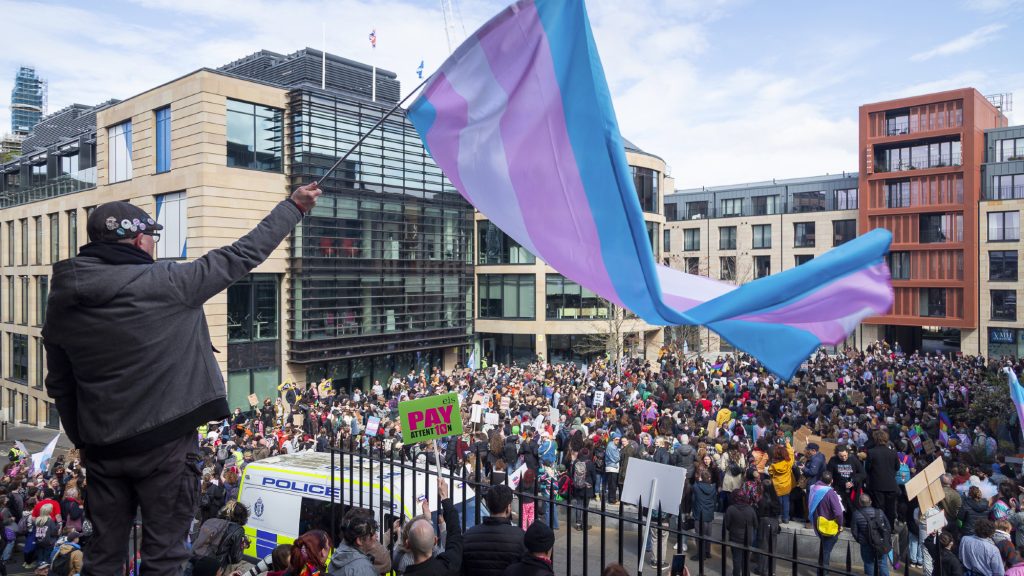
But the Tories chose their terrain, and their scapegoats, carefully. They correctly assessed that there was sufficient transphobic sentiment in Scotland, and that the effect of incessant transphobic propaganda had had a sufficient impact, to mute opposition. Emergency demonstrations were indeed called in response to Westminster’s veto, but the attendance was largely made up of LGBTQ+ youth and their allies. With a few notable individual exceptions, the organised pro-independence left was largely missing in action.
Following this, transphobic Scottish organisations also took a case to the UK Supreme Court, resulting in an incompetent ruling that rolls backs rights that trans people have enjoyed since the Gender Recognition Act was passed in 2004. This was quickly followed by the Tory appointed head of the UK Equality and Human Rights Commission issuing “interim guidance” that effectively bars trans people from human rights (as well as opening up a nightmare regime of gender snooping that is already affecting cis people who have been judged by others on their appearance). This is the same Supreme Court which ruled that the Scottish Parliament could not hold an independence referendum, despite the results of Scottish elections returning parties which promised one to office.
The Scottish Greens position on trans rights is positive and clear. But even this has not been without dissent from some members, leading to the loss of an MSP in the previous parliament. A leading advocate of land reform was incapable of putting aside his own strong feelings against trans rights in order to remain in parliament and pursue his main area of expertise.
Meanwhile, we can look to the US to see where the potential end point of this process could be leading: the total removal of trans people’s citizenship and humanity. Under Trump’s orders, trans women have been moved to men’s prisons where they will suffer unimaginable abuse, the mere mention of trans people is being purged from the state’s vocabulary, and trans people face having their passports and identity documents potentially invalidated. Many trans Americans are actively exploring what possibility they have to flee the US, or at least to relocate internally. Naturally, this is only possible for those with the resources to do so, although networks of mutual aid are forming to facilitate escape. This is not hyperbole, this is real, happening now and cannot be looked away from. There are currently 851 anti-trans bills being discussed in 49 state legislatures, and as the US economy and global status is in world-historic decline, American media devotes much of its time to attacking trans children playing sports at their schools.
Those sections of the global “left” that are complicit in this campaign of scapegoating and dehumanisation cannot play any role in fighting back against it. Transphobia has brought them to common cause with the far right and right wing Christian extremism. The international moral panic about trans rights’ main goal is scapegoating, but it also has the handy by-product of being a machine to convert progressive people into useful idiots of fascism. By repurposing what can be mistaken as a genuine concern for (still utterly real and pervasive) oppression of women by men, people are successfully twisted toward a position who’s logic is actually one of rigidly enforced, pseudo-biologically defined and brutally hierarchical gender relations. Needless to say, such a system is highly oppressive to all women, trans and cis, not to mention humanity as a whole. But it is specifically based on the official non-humanity of trans people, with all the horror which that implies.
Transphobia has been core to the far right since before the Nazis burned the books of Institut für Sexualwissenschaft. Hierarchical gender relations are one of the central bases of the far-right world view, and any disturbance of gender binaries is perceived as an existential threat to be met with violence. Today, far-right governments around the world rail against “gender ideology”, a catch all term that feminism and LGBTQ+ rights are an evil threat to society. This drives waves of violence in our communities, both through state repression and inciting and radicalising people towards hatred.
Moreover, the language being used about trans people now, painting them as a threat to vulnerable women and children, is identical to the way the gay people were described in the past, and conforms to the classic template of all moral panics fostering visceral hatred and disgust (“won’t someone think of the children! What’s next, animals?”etc. etc.) This reactionary movement has been allowed to set the terms of debate, leading to successful attempts to impede progress and rollback basic civil rights for all LGBTQ+ people (and with substantial collateral damage to large numbers of cis people).
It’s simply not possible for any serious left political force, particularly one that is pro-independence, to contend elections without taking a position on rampant transphobia in our society, and the blocking of the democratic outcome of Scotland’s debate around trans rights by Westminster. In a society that has become a hostile environment for trans people, taking no position or fudging one will satisfy nobody, and silence is complicity.
Difficult Questions 3: Migration, asylum and race
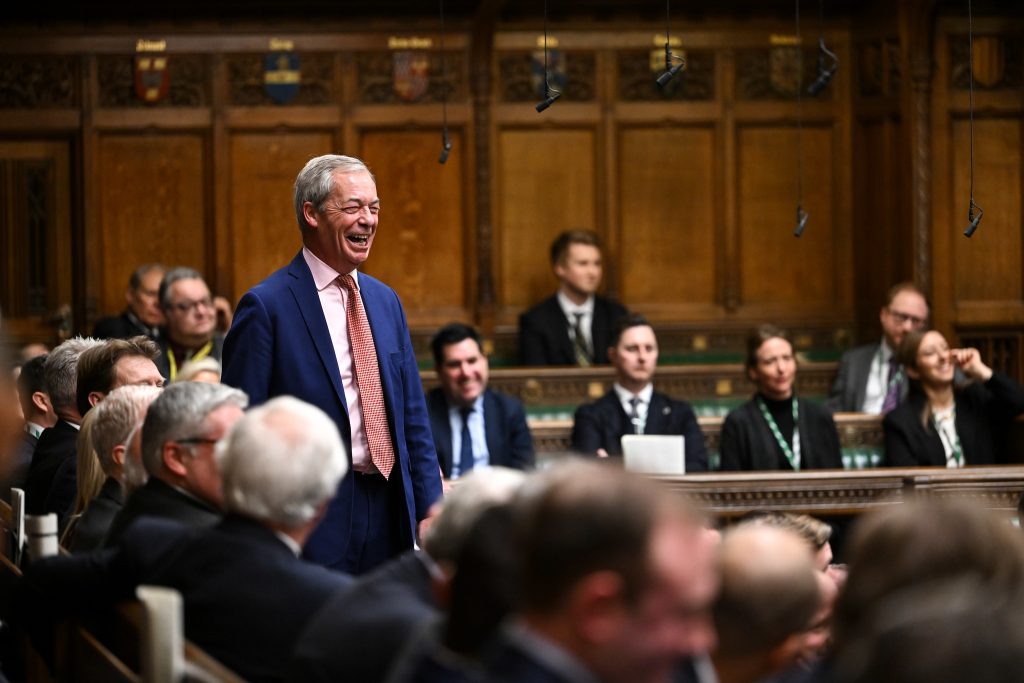
The true contribution of Nigel Farage’s career has been to put racist and xenophobic and bullshit about immigration back at the very centre of British politics. It doesn’t idealise any previous period of British attitudes and regimes of migration to say there has been a massive backlash here also. This was the force that drove the UK’s vote to Leave the EU, and which has determined so much of UK political events since. Now Farage’s henchmen seek to bring this hatred to Holyrood.
The result has been the rise of racist violence such as last summer’s riots in England, and the growth of state repression as part of the Hostile Environment. This is a pattern for similar far right forces globally. Across the world refugees and migrants are subject to deadly and dangerous journeys to escape persecution and poverty, and face militarised policing and inhuman conditions of detention without trial, alongside mob violence incited by those in elected office.
Perhaps the greatest form of unresolved discrimination of our time is on the basis of which state (or none) different humans have citizenship from. This is literally the difference between life and death. It’s not a question that is going to go away, but is only going to become more pressing every year, as spiralling climate change and conflict force ever increasing numbers of civilians to flee from their homes. As this century progresses, and the ecological crisis makes areas of the world functionally uninhabitable, the question of the basic humanity of those in more secure areas, and how willing we are to share that security, is going to be the defining human rights question of our era.
Socialists should know the answers to the lies the far right peddles about refugees and migrants. They are scapegoated for the failures of the housing system and public services, when the causes for this are governments unwilling to face the political difficulties of trying to tax the rich or properly fund our communities. Blaming Others for these problems is a tactic used by those responsible to get themselves off the hook.
If a group of immigrant workers is being used to undercut wages, then it is the job of the trade union movement to organise them and ensure equal and fair wages for all in the workplace. This might be difficult, and require investment and thought – but it’s better than the alternative of outsourcing the job of protecting wages and conditions to the UK Border Agency.
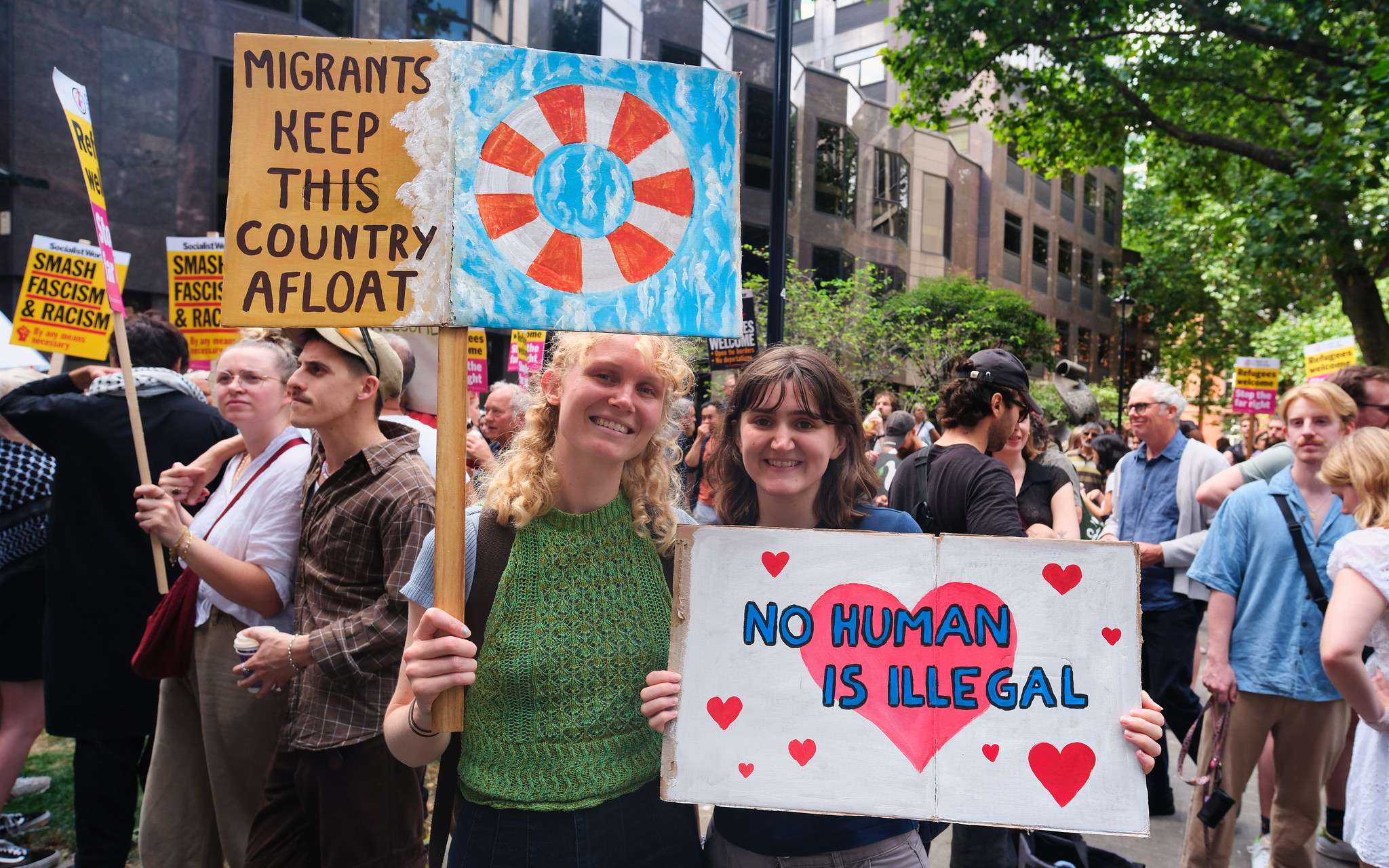
There are no “legitimate concerns” about immigration. There are scapegoating myths fed to communities that have been failed by capitalism and successive governments. There can be no pandering to anti-immigrant views – given how prevalent they are as an explanation for our current social crises, we must feel confident and equipped to confront them at every turn.
Socialists must be the strongest defenders of the rights of the human right to seek asylum, denouncing their brutalisation and imprisonment. As a Socialist MSP from 2003-2007, Rosie Kane and her team played exactly this role, helping thousands of people faced with the inhumanity of the Home Office – an experience that deserves to be studied by any future would-be Socialist MSPs.
Contrast this to today, when many on the left call for capitulation to the arguments of anti-immigrant politics as the path to electoral success, from Red Wall Labour MPs to the incredibly dispiriting recent statements from Bernie Sanders.
Immigration is not a topic to be dodged, but robustly argued in favour of. This is not only morally and politically right, in accordance with long established cultural norms of hospitality (which of course clash with also long deeply ingrained institutional racism), but is also a necessity for a society with a declining and ageing population. New Scots from across the world are desperately needed to revitalise our society, and we should be proud to make that case without fear.
The dynamics of contemporary anti-migrant politics are complex, and obviously contain people with whom an attempt to positively engage and win to a different position must be made. This is further complicated by the not-insignificant numbers of people who are themselves the children or grandchildren of people who first came to the UK as immigrants becoming supporters of anti-migrant politics in Reform, the Tories and Labour. But any effort to reach out and engage with those sympathetic to anti-migrant politics, without itself capitulating and adopting the claims of anti-migrant politics, can only be on the basis of a crystal clear political position and understanding of the facts.
More widely, the far right have long nurtured white anxiety about race, attempting to portray any move in favour of diversity or inclusion as an attempt to undermine the position of white people. This means that even the presence of people from other backgrounds in public life is often perceived as a threat, and any moves to address this as existential attacks. The Black Lives Matter movement has been a watershed in the current decade, not only as the current generation’s expression of a very long tradition of black radicalism, but also for exposing the continued anxiety of many white people (including some on the left) about the very act of articulating such a perspective.
Few would question on paper that any new socialist initiative must be actively anti-racist. The question once again is what that will look like in practice. Who will be responsible for prioritising and strategising interventions against racism? What issues will be campaigned on, and which will be tactically avoided? What level of autonomy will those directly affected by racism have in deciding on these questions? How far will the organisation be willing to go in addressing its own social context, formed in a society which is institutionally racist? How will it ensure the diversity of its own leadership and membership (or will it not care)? How prepared will we be to not only refute and oppose explicit outright racism, but to positively make the case in favour of immigration and respecting the rights of refugees and migrants?
Difficult Questions 4: Brexit
In some ways, the humiliation of RISE: Scotland’s Left Alliance in 2016 was a blessing in disguise. Despite the fact that it was clear during the Holyrood election campaign that year that there would be a referendum on the UK’s membership of the EU, RISE had no official position on the defining question of 2016, as we were an alliance of those with differing views.
If we had, by some unknown act of magic, succeeded in electing a RISE MSP, the party would likely have been almost immediately plunged into deep disagreement and possible split around our attitude to Brexit. Cat Boyd, the person best placed to be that hypothetical RISE MSP, stated that she abstained in the EU referendum.
It’s widely understood by even Brexiteers today that leaving the EU has brought no tangible improvements for people living in the UK, and instead has made our lives more economically and politically insecure. The Leave vote was propelled by the xenophobia driving British politics, and was always a proxy vote on the rights of immigrants. The result, and the subsequent end of freedom of movement, has been an absolute nightmare for millions of European citizens living in the UK, a constituency sneered at and ignored by the Brexit left – yet another set of communities who found us absent from their defence.
The disaster of Brexit has led to the current pathetic position which sees a visibly cowed and scared Keir Starmer trying to charm his schoolyard bully in the White House in the hope of preferential treatment. There is no viable path forward for an independent Scotland that does not involve alliance with our European neighbours, unless we hope to become a vassal of the increasingly fascist American polity.
You don’t have to agree with my view on Brexit to recognise this is a central issue that cannot be dodged, particularly for advocates of independence. The majority in Scotland continue to support rejoining the EU, and this rises within independence supporters. A coalition built on the fanciful “Lexit” position will be one with many progressives outside the tent. Despite the years that have elapsed since the Brexit process was finally completed, the question has only grown in salience, as the US has not only entered steep imperial decline, but is thrashing in its death throes at our continent. If we wish to avoid being dragged down with it, we must band together.
Difficult Questions 5: Geopolitics and a multipolar world

The full-scale Russian invasion of Ukraine in 2022 has most clearly revealed divisions on the left that have been building for years, around how we view the conflicts and revolutionary struggles taking place internationally.
The international movement against the Iraq invasion was one of the most significant achievements of popular power in the 21st century, achieving a globally coordinated level of mobilisation that has not been matched since. It failed. The disasters of the following years of US/UK occupation led many of those in politics and the media who had been gung-ho in their support for the invasion to subsequently discover it had been a bad idea all along. Vindication in hindsight is however little comfort when the immediate cost of failure is the horrors that were witnessed in Iraq. This cycle is being repeated for a new generation who have taken action against the genocide in Palestine, and have to face not only harsh state repression, but also total indifference to mass murder by the UK’s leadership.
For many of those formed by the anti-war movement of the 2000s, there has been a curious and tragic reaction to this defeat. It has led many to adopt a view of the world that is the bizarre funhouse mirror of the ideology that animated the Bush administration to hubristically believe it could remake the whole world. A dark version of American exceptionalism in which the US is uniquely powerful to dictate political developments everywhere, and where it is the overwhelming and only significant source of global evil.
Taking George W. Bush’s manichean statement that “You are either with us or against us” deeply to heart, they support any and every government that declares themselves rhetorically opposed to the US. This continues even as these regimes themselves copy and use the same violent, Islamophobic, “war on terrorism” language and policies which they claimed to once oppose.
In whitewashing the actions and motivations of Gaddafi, Assad, or Putin, the “anti-imperialism of fools” finds a common platform that can unite the left with the far right. This reaches the depths of utter moral depravity when we find armchair conspiracy theorists questioning the experience of atrocity survivors from the comfort of the west.
From 2013-18, the fascist monster Bashar al-Assad used poison gas dropped from helicopters to mass murder Syrian civilians. This actually existing and real use of weapons of mass destruction had no practical repercussions from the rest of the world. Meanwhile, many on both the left and the far right joined in a campaign of conspiracist atrocity denial, trying to claim the attacks had not happened or had been carried out by Syrian rebels or western forces. This disgusting lie is no different to the denial of any other atrocity, from the Armenian Genocide to the Holocaust. Children choking on chlorine is not a matter about which we can politely agree to disagree.
Much of the global left abdicated responsibility and looked away while the Assad-Iran-Putin alliance in Syria committed mass murder and genocide, while a subset actively gloried in it. A lot of the reason for this aversion to engagement boiled down to the fact that they bought into the Assad regime’s narratives (bolstered by their international allies Putin, as well as the far right and sections of the left) that they were solely fighting terrorism. Scary looking Jihadis in masks, “head choppers”. Entranced by this racist image, the responsibility to make direct links with Syrian people and popular organisations was completely abandoned. Instead we got a lot of “leftsplaining”, or cod-geopolitics from those who have a delusional view of themselves observing a global chessboard.
Starting from the viewpoint that the US is the only source of evil means other crimes and genocides need to be explained away. The camps that China has built for Uyghurs, Assad’s gas attacks, the Russian massacre at Bucha – we don’t have to worry about any of these because they are all State Department propaganda. Fake news.
Such an unwittingly colonial view of other societies comes inevitably with the dismissal of the inconvenient perspectives of peoples who fall victim to the world’s other imperial powers. With many honourable exceptions, the global left basically manages to be in solidarity with approximately 1.5 international struggles: Palestine, and to a certain extent Kurdistan. When it comes to the issues facing Syrians, Ukrainians or Uyghurs, they are silent (with honourable exceptions). Worse, they join in with laundering the propaganda of their genocidal oppressors, slandering those who fight back as all being Jihadists or Nazis. At best, they are denied any agency and reduced to the status of “mere pawns”, who’s suffering might be briefly bemoaned, but is ultimately of no consequence in the wider march of history.
The result of this is that, time and again, when it comes to many of the great revolutionary struggles of the 21st century, the left finds itself disoriented and falling into the camp of counter-revolution – decrying mass popular movements against autocratic and corrupt regimes as “colour revolutions”. Again and again these movements have been defeated only by brutal repression, abandoned by international networks of solidarity. One of the only revolutions of the 21st century that has been able to endure was in Ukraine in 2014, which ever since some on the left have called a “US coup” and a justification for Russia’s brutal invasion.
The far-right worldview is based on a global “Darwinian” struggle for domination among competing nations, in which there is no mutually useful collaboration but only might equals right and the acquiescence by the weak (“You don’t have the cards!”) to the will of the strong. Of course there are strong continuities across US imperial history for this view, but this previously had been tempered at least by a felt need for alliances and some semblance of global legitimacy.
Today, the rapidly declining hegemon no longer cares, and is led by a man who shares with his fellow imperial autocrats in Russia, China and Israel a desire for a world carved into spheres of influence for great powers to dispose of as they will. It seems that Canada and Greenland are to be expected to conform to a new Monroe doctrine, Ukraine is expected to accept being a satellite of ‘Russkiy Mir’ and Israel is allowed to seize ever more sections of Palestine, Lebanon and Syria. Whatever short term political disagreements there are between these states and others with similar leadership, they are today united by an underlying commitment to a world order where the seizure of territory by force is once again completely normalised.
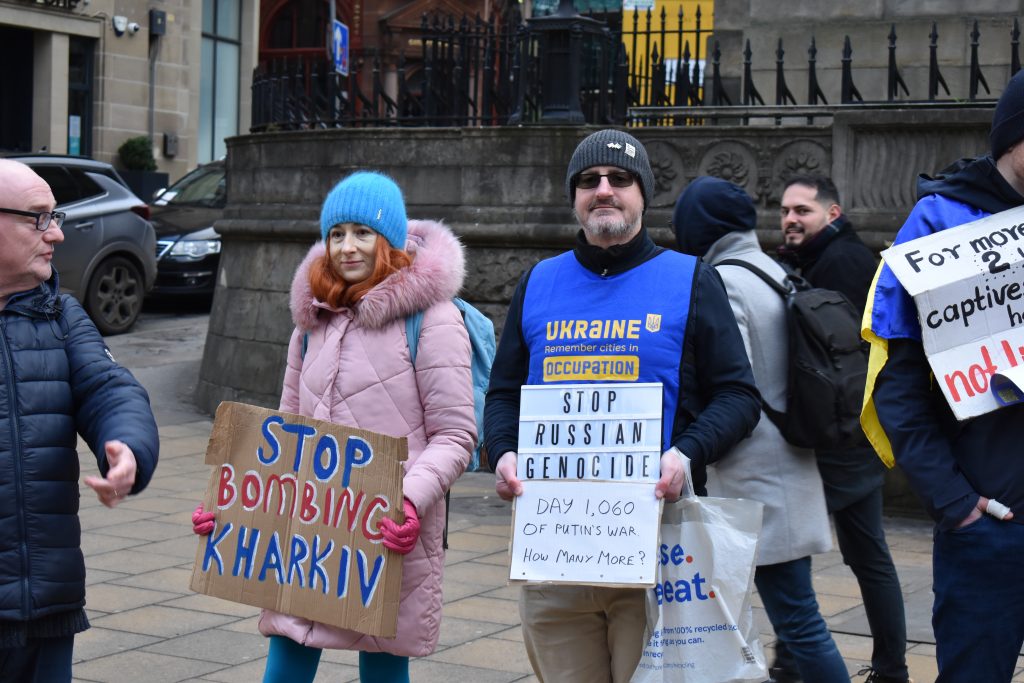
In the topsy-turvy world of some left “anti-imperialists”, this constitutes progress, because there are multiple competing centres of (authoritarian, imperialist, capitalist) power, and because we have dispensed with the “hypocrisy” of even attempting to constrain power through international law. It isn’t necessary to idealise the now collapsing international order to recognise that we are now entering a period of massive instability that will undoubtedly be more dangerous, and carry a greatly increased risk of planet trashing war.
Those of us who continue to resist far-right rule, in societies where they have come to power and those where they have not, need to forge new bonds of internationalism that cross all geopolitical boundaries. This would be based on truly universal principles of respect for self determination, human rights and the limited democratic rights we have, and unremitting opposition to all imperialisms, occupation and colonialism, whatever their origin.
Even where we can find some semblance of “left unity” on global affairs, in opposition to the genocide in Palestine, we find these divisions express themselves. This is because what is one of the most important international questions of our times has unfortunately been used as a platform for grift by various ghouls of the far right and left, who are superficially “good on Palestine” while actively defending the crimes of others. Most notable of course are the many Assad fans, who speak on Palestine, but not about Assad’s bombing of Palestinians in Yarmouk. They proclaim that this is the first genocide that has ever been livestreamed, while often sharing pictures of atrocities that were in face committed in Syria by Assad. Sadly, this isn’t the first genocide to be documented in detailed video online – it’s just the first one they professed to care about. In the current emergency there are of course situations of tactical unity in opposing genocide. But it is a fact that such disgusting politics are a massive liability to a genuinely mass movement in solidarity with Palestine.
The global left signally failed the Syrian revolution, perpetuating racist slander against its protagonists. The Syrian people liberated themselves from the tyrant Assad despite this. Since then, the Russian war machine has moved on from bombing schools and hospitals in Syria to bombing power plants and hospitals in Ukraine. And much of the global left is once again failing this basic litmus test of human solidarity. Ukrainians need arms to defend themselves from total occupation by their historic coloniser, which has imposed torture chambers and death squads on the areas it controls. If Stalin’s guns were good enough for the Spanish Republic, and the Kaiser’s guns were good enough for the Easter Rising, then NATO anti-air missiles are good enough to protect Ukrainian civilians from aerial murder.
“Those of us who continue to resist far-right rule, in societies where they have come to power and those where they have not, need to forge new bonds of internationalism that cross all geopolitical boundaries.”
An analogy to the Spanish Republic, or perhaps more fittingly given the current “peace talks” being led by Trump, Munich in 1938, is frighteningly apposite. Solidarity with Ukraine is also self-help, an action taken to prevent greater consequences for Europe if Russia is victorious. Ukrainians are bleeding on battlefields in the hope that inhabitants of nations to their west will not have to do so. These are not “quarrel[s] in a far away country, between people of whom we know nothing.” These events affect Scotland, and decisions made here materially impact the course of wars and revolutions elsewhere. When such questions of life and death, and the truth and lies of the most heinous crimes taking place in the world today, then once again a line must be drawn over what we really mean by internationalism.
In Scotland, much important work has been done in this direction by the small forces of the Ukraine Solidarity Campaign Scotland, which has called on the UK government do more to provide the arms desperately needed for Ukraine’s self-defence against invasion, while also building concrete and practical links with Ukrainian trade unionists, environmental activists and socialists.
One of the most difficult questions about international solidarity, and the need to oppose the new international far right alliance, is around military spending. For those of us who recognise the internationalist duty to arm Ukraine’s self-defence, it’s becoming increasingly clear that Ukraine’s resistance will only continue if Europe is able to significantly increase support to make up for Trump’s withdrawal of aid. This requires increasing the capacity to manufacture ammunition, drones, anti-air defences etc. A vigorous debate is currently taking place within the pro-Ukraine left about the terms of this increase, and whether we must also face if our societies need for self-defence needs to be enhanced. This is an extremely difficult question, and is not easily resolved by simplistic slogans such as “Welfare not Warfare”.
The Scottish left’s historic unity around opposition to nuclear weapons on Scottish soil deserves to be maintained. Weapons of mass destruction are inherently unjustifiable, as it is impossible to use them in a way that does not also target civilians. Scots activists have played an important part in the process that has led to the Treaty for the Abolition of Nuclear Weapons, and an independent Scotland should ratify the treaty while removing them from Faslane.
However, it must also be acknowledged that the anti-nuclear cause has been dealt a massive blow by Russia’s invasion of Ukraine. On independence in 1991, Ukraine carried out unilateral nuclear disarmament, divesting itself of its Soviet arsenal in return for guarantees that its sovereignty and territorial integrity would be respected and defended by Russia, the US and UK. States around the world look to what has happened subsequently, and draw the conclusion that nuclear weapons are the only defence against invasion. This is likely to lead to a new age of nuclear proliferation, with Donald Tusk already stating Poland’s nuclear intentions. The only hope of arresting this spiral is to provide Ukraine with sufficient conventional weapons to allow it to defeat its historic coloniser, the most heavily nuclear armed state in the world, Russia.
But beyond nuclear weapons, there are many other practical scenarios that need to be considered. How would the left respond if Russia chooses to drag out cables from the seabed that provide the UK with internet access? What do we have to say if (again) there are assassinations in the UK using nerve agents or radiation that pose a risk to innocent bystanders? Are we confident that there is sufficient protection against the regular digital attacks on the health, energy, transport infrastructure on which our lives depend? Without wanting to make a final pronouncement on the outcomes of such debates, it’s clear that pretending the situation is not what it is won’t get us very far.
Difficult Questions 6: Our own history
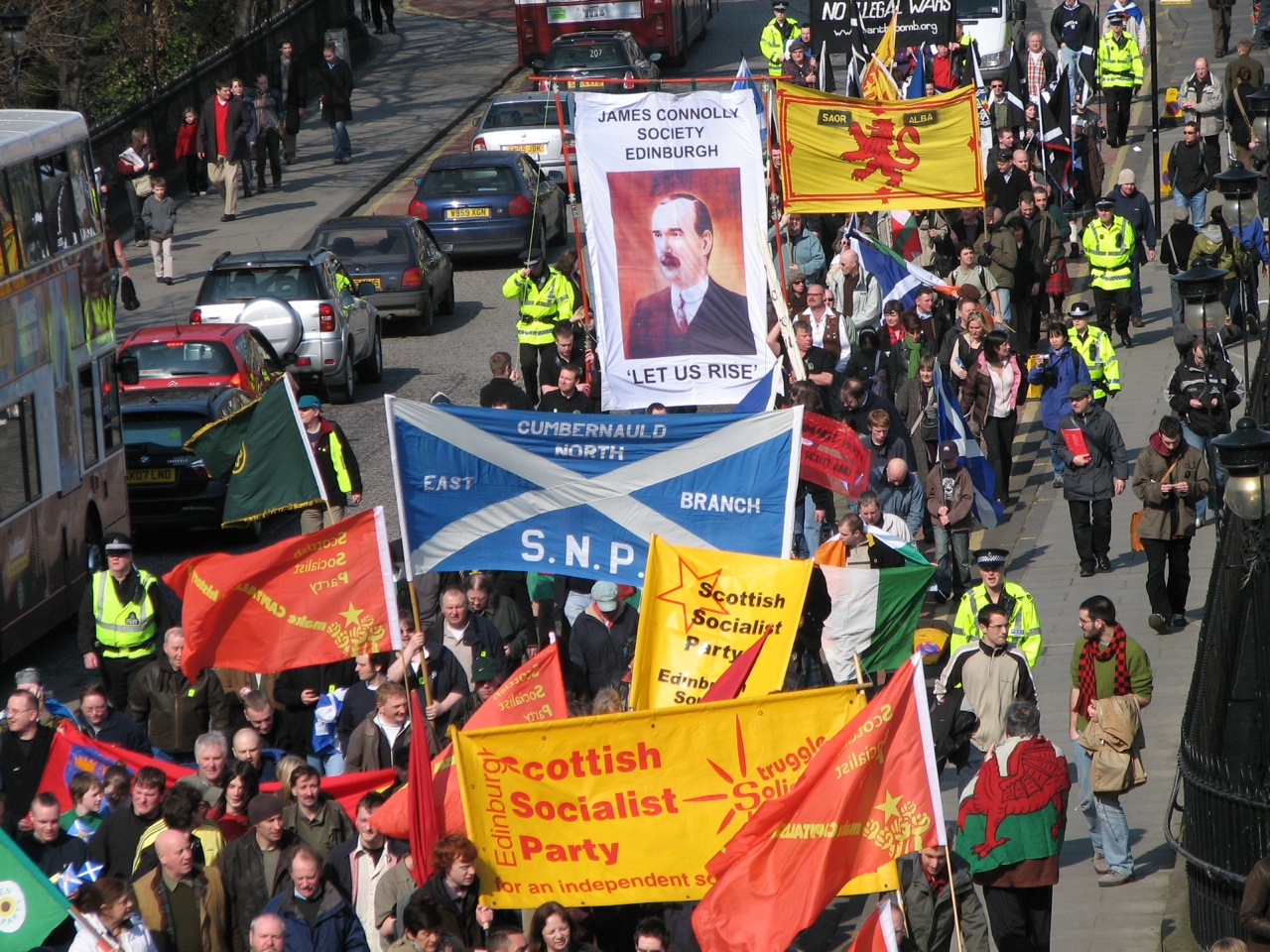
The final issue that I suggest we must face before any socialist realignment can take place in Scotland is our own history over the last 20 years.
The socialist left in Scotland came together in part spurred by the establishment of the Scotttish Parliament in 1999. In the early 2000s, the united Scottish Socialist Party was seriously contesting for position as Scotland’s fifth main political party. The SSP had a national organisation of branches that extended into even smaller and rural areas. Although the core of the party had been formed by Scottish Militant Labour, it also drew on a diverse membership with roots in the movement for a Scottish Parliament, against nuclear weapons or motorway expansion in working class communities. This was reflected in the election of one SSP MSP to the first Scottish Parliament, and six to the second.
There is not the space here to reiterate everything that happened subsequently. Suffice to say that the rise of the SSP had been highly over-dependent on the charisma and celebrity status of the most famous member. This power propelled the party to prominence, but also helped create or exacerbate narcissistic and messianic delusions on the part of the individual involved. He came to believe he could sustain a public image based on lies, and enlist an entire movement to back him up. He was wrong, and when he found out he tried to mass bully both his colleagues and former sexual partners by whipping up a campaign of misogynist hatred.
This resulted in a split in the SSP, two trials, one massive police investigation, the breaking of countless personal relationships, a lot of trauma, a lot of people who got away with perjury and one who didn’t, plus the complete loss of credibility from the electoral socialist movement in Scotland. In a bizarre turn of events, the left found itself the subject of one of the biggest political sex scandals in Scottish history. In the 2007 election, all of the resulting factions of the self-designated socialist left were expelled from the Scottish Parliament, and have not returned since (outside of individual members of Greens, Labour and SNP).
The wannabe cult leader who destroyed the SSP was not able to do so alone. He was assisted by factions which today aspire to play a role leading the development of new left vehicles, notably the Socialist Workers’ Party (SWP). These groups are serial ambulance chasers, bandwagon jumpers, wind sniffers and grifters. They are sects which exist primarily to perpetuate their own party apparatus. Any campaign that arises is a potential host for the parasitic organism. They go wherever they think there will be a crowd they can sell papers to, and potentially leverage into some kind of position of power.
In the SSP split of 2006, the SWP were vehement advocates for the idea that the Great Leader had been the victim of a conspiracy between Rupert Murdoch and extreme feminists. As ever, this was not said out of conviction, but out of a purely tactical calculation that riding on celebrity coat-tails would give them the greatest possible advantage. In the process, they gleefully destroyed a political infrastructure that had been the work of decades to build up in an act of utter institutional vandalism. In the process, they viciously joined in with that celebrity’s campaign of misogynist bullying.
The split in the SSP also speaks to a wider issue for a left that struggles to gain attention and credibility in mainstream politics: trying to use celebrity shortcuts, and in the process creating messianic, out-of-control and unaccountable leaders. Tommy Sheridan, George Galloway, even Alex Salmond – the pattern keeps repeating, and the supporters of these men keep getting exploited and burned. It is time for us to model a different kind of politics, and a different kind of leadership from screeching displays of performative masculinity. This will save a lot of time in future from having to deal with the behaviour that such social dynamics tend to bring out of men who thrive on the adoration of a crowd.
“The split in the SSP also speaks to a wider issue for a left that struggles to gain attention and credibility in mainstream politics: trying to use celebrity shortcuts, and in the process creating messianic, out-of-control and unaccountable leaders.”
Omitted from the list of problematic left leaders was perhaps the most damning of them all, simply because he is not a charismatic celebrity. But the defence of his inexcusable behaviour by his friends and comrades was no less forthright as a result. Martin Smith was the National Secretary of the SWP, and in 2013 was accused of rape and sexual assault by a much younger woman who was also a member of the party. This was then investigated internally within the SWP by a committee containing close personal friends of Smith, who proceeded to question the woman involved in a highly inappropriate fashion before declaring Smith (labelled ‘Comrade Delta’) innocent. This led to large-scale splits in the SWP, with several new factions of ex-members being established.
The widespread and wholly justified disgust at the SWP’s handling of this matter has dogged them ever since, leading others to refuse to work with them, their initiatives to face protest, and undoubtedly has been a barrier to recruitment to their ever-revolving hamster wheel. This finally led them to issue a belated and inadequate apology in 2024, declaring that they would do better in future. This has been rejected by the original woman who brought the complaint, as well as many of their former comrades.
Too little, too late this statement may have been, but any acknowledgement of failure from the socialist left is on some level refreshing. We must ask: when will the SWP (and groups/individuals like them) take responsibility for their role in destroying elected socialist representation in the Scottish Parliament in the name of a misogynist celebrity? When will we hear them apologise for their support of the gross sub-fascist demagogue George Galloway? When will they realistically assess their role in the failure of the UK movement against the war in Iraq?
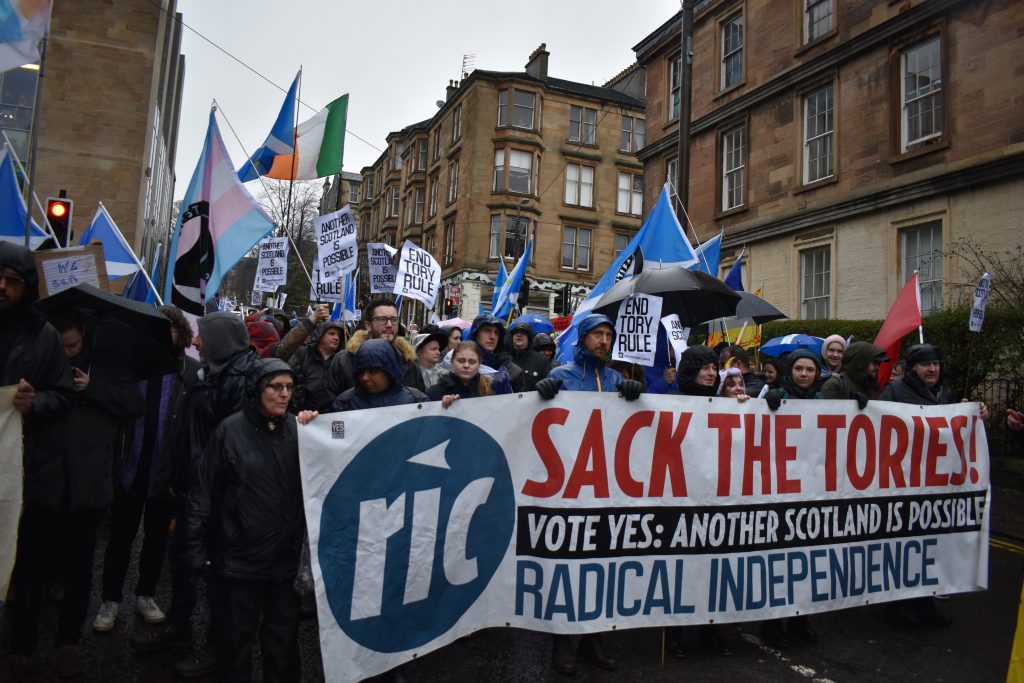
The only thing that could lift the stigma of the 2006 split from the Scottish socialist left was participation in the mass movement for Scottish independence. In this context, the Radical Independence Campaign (RIC) is an experience worthy of deep study for the way it was able to unite diverse forces and launch mass mobilisations as an explicitly non-party political, non-electoral (outside of the independence referendum) organisation.
The euphoria on the streets of Glasgow and Dundee right before we heard the result in 2014 was a high we kept chasing, and mistakenly believed could leverage into a return of the socialist left in Scotland. But there was nowhere near enough time between 2014 and the next elections in 2016 for Scotland’s divided socialists to build the necessary political consensus or infrastructure, even boosted as we were by a new wave of activists politicised by the Yes campaign. Many stupid errors were made, corners were cut, and it became clear that the vehicle we had constructed, RISE: Scotland’s Left Alliance (named with a clunky and embarrassing acronym), was in fact being controlled on the basis of cliques and unaccountable leadership, rather than any democratic process.
The actual election campaign which resulted was ineffective, unplanned and unprofessional. Despite heroic efforts by many individuals involved, the project lacked a clear political purpose or agreement on what we hoped to achieve. After humiliation at the 2016 elections, it rapidly collapsed under the weight of its own contradictions.
One of the major factions behind both RIC and RISE was a group of activists who splintered from the SWP prior to the Comrade Delta affair becoming public. At launch they constituted themselves as the International Socialist Group, but today mainly focus on the production of the website Conter. This group clearly has had significant achievements in building movements such as Radical Independence – and many individuals have, since the RISE debacle, dedicated themselves to valuable work in the trade union and tenants’ movements. But the group also has a track record of building big rallies and conferences without a strategy of where to go next, leading to the generation of a lot of energy and hope that ends up draining away to nothing. Serially abandoning campaigns they established when a new vehicle came along betrays a political formation in the cynical methods of the SWP.
This process reached a nadir with their attempts to destroy the Radical Independence Campaign in 2021. This involved packing a chaotic Zoom meeting during the pandemic to conduct a completely incompetent vote with no discussion. This was followed by unilateral declarations to the media, and on the organisation’s official Twitter account, by the faction responsible. It seems the only reason for this is that Conter comrades could not countenance that they could no longer control RIC as an unaccountable clique, and as far as they were concerned it was their ball and they were going home. Given the alignment of some of these activists with transphobic politics subsequently, it’s also worth speculating the motivation may also have partly been opposition to RIC taking an active role in the struggle for trans rights.
This latest attempt at vandalism was defeated by the efforts of those RIC members and local groups that have continued the campaign. But the point is, once again, factions of the left burned the house down, destroying organisations that had taken years of hard work to build, rather than democratically share power. Trust is earned, and when people have repeatedly broken their word, manipulated events and lied to your face, you would be a fool to trust them again.
What is to stop history repeating again? What will yet another attempt at getting the same set of individuals, with all this baggage, in a room again achieve? What can we put in place that builds a durable culture of trust? In the almost decades since the SSP split, almost none of this work has been done, and much has happened to make the situation worse. Making things better is going to take time, a lot of talking, taking responsibility and a genuine will to learn – some form of Scottish left Truth and Reconciliation Commission. Whether that is even possible or worth the effort is a question of how much is it really that the Scottish left is united about.
“What is to stop history repeating again? What will yet another attempt at getting the same set of individuals, with all this baggage, in a room again achieve?”
A final thought must be turned to the remote prospect of success. At some hypothetical future date when socialist MSPs return to Holyrood, they must learn from the inherent risk that such a position poses: complete subsumption in parliamentary politics. The rapid success of the SSP in 2003 led to many of our leading activists taking up positions related to parliamentary work. The party’s campaigns became centred around the bills that our MSPs put down in parliament, with an endless round of street stalls asking for petition signatures on issues like scrapping the council tax or universal free school meals.
These campaigns were worthy and popular. But even before the SSP lost all parliamentary representation, they had limits. The signatures gained were really a means to the end of selling newspapers and raising funds. The petitions never went anywhere, and were immaterial to the success or failure of the campaigns they promoted. Fundamentally, as a small bloc in the Scottish Parliament, the SSP had little power to make any of its policies a reality. Perhaps the longest term impact it has had was that by socialising these policies to the public, it smoothed the way towards the SNP adopting elements of them when they reached power.
These problems were only magnified immensely when the SSP lost all its MSPs. There was no reorientation. There was no idea of what to do next. We simply went on doing petitions about issues that we no longer had the power to bring parliamentary bills about, like a Japanese soldier still fighting the Second World War long after it had ended. The staff apparatus we had developed was no longer sustainable without the funds brought by MSPs, but a core remained on. Meanwhile, talented and dedicated members slowly drifted away. In the years since, it would appear that the SSP has (like many left sects) gone through several generations of young people who had been recruited, burned out and left disillusioned by their experience.
Despite their status as a rump, stuck on the endless sectarian hamster wheel of survival, the SSP does at least have one major advantage that any other hypothetical socialist vehicle does not: they actually exist as a party, and have a consistent record of standing in elections (and mostly losing epically) over the last 20 years. During the 2016 election campaign, a tremendous amount of energy was dissipated by endless arguments around whether and how the SSP would participate in the RISE coalition. A decade later, the SSP has already announced its intention to stand in all eight electoral regions for the 2026 Holyrood election.
Readers of Heckle contain many alumni of the SSP, either veterans of the 2006 split, or of the subsequent generations of discarded activists. For many of us, it goes without saying that we could never step backwards into the SSP. But the party’s continued existence is a fact that must be accounted for by anyone seeking to create a new socialist parliamentary challenge. If there is not currently enough of a voter base to sustain one socialist party, there is certainly not enough for two.
Moreover, the SSP recently stood in a Glasgow council by-election and is running in the Hamilton, Larkhall and Stonehouse by-election, in both cases fielding candidates who were young women trade unionists who were not active during the history described above, and in the council by-election recording a result of 7%. This shows that the dynamics within the actually-existing Scottish Socialist Party may be more complex than former members are aware – and that a strategy that hinges on ignoring or competing with the SSP is surely not viable. This is stated in full knowledge of the massive obstacles to rapprochement that exist between the individuals and groups involved in this discussion.
Conclusion
The above is just a sketch of some of the reasons why Scotland once had strong socialist elected representation, and now doesn’t. It’s an experience that can be very painful for all involved to talk about. But sweeping it under the rug and pretending it didn’t happen is simply a recipe for repeating the same mistakes. If the socialist left is to be worthy of people’s votes, it must face its own errors and demons.
- Heckle has called for and is delighted to publish contributions from a range of socialist writers on the challenges facing the Scottish left in the run-up to the Holyrood elections next year. If you want to share your own views, get in touch with our editorial board.
